About Engineering Physics UMN
The Engineering Physics Undergraduate Study Program (Dutch: Technische Natuurkunde) plays a vital role in comprehensively exploring physical phenomena, supported by a solid grounding in mathematics, fundamental sciences, and essential engineering skills.
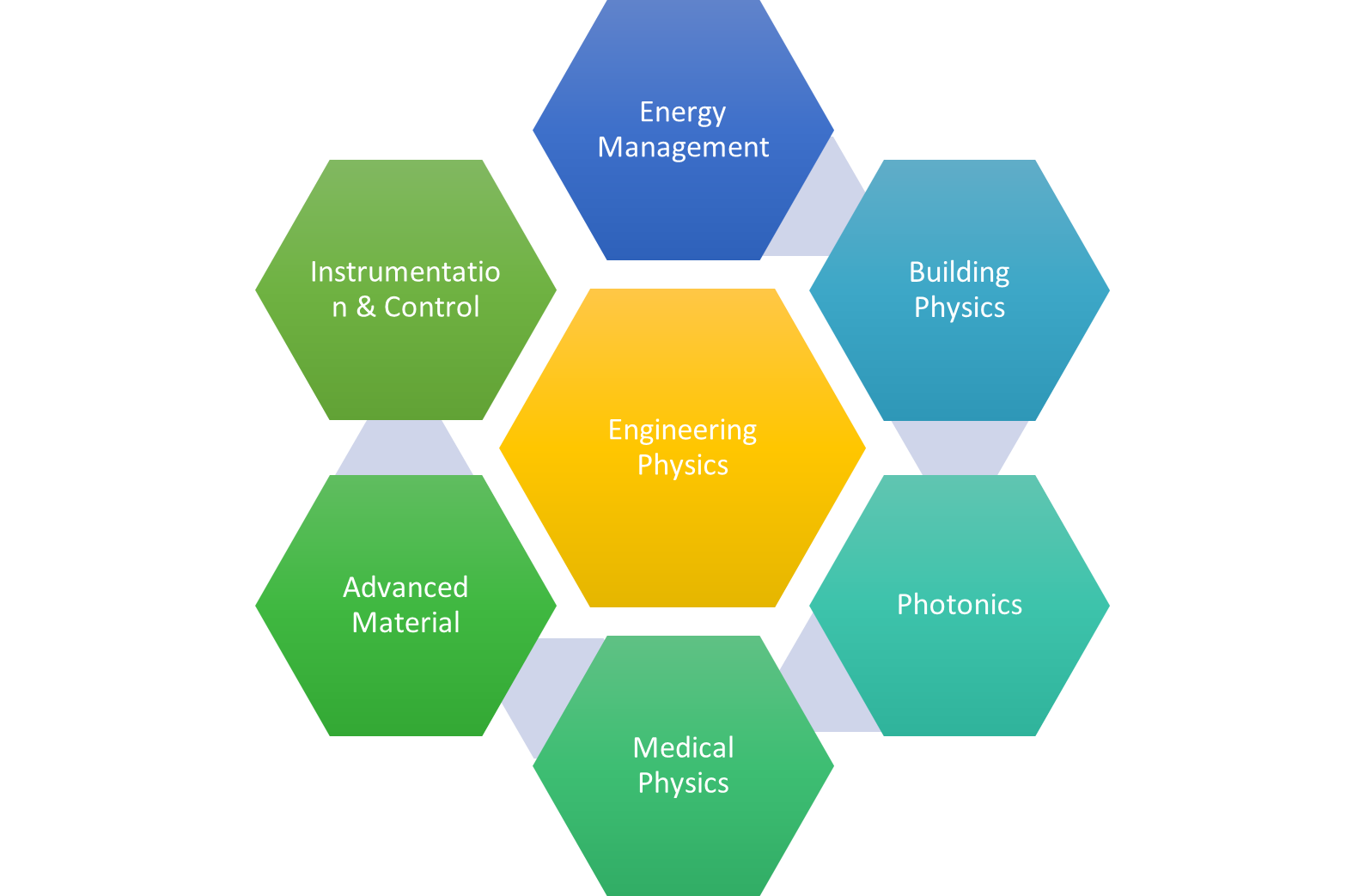
Amidst the dynamic landscape of scientific and technological advancements, Engineering Physics embodies various integrative competencies, as illustrated above. Among these, Universitas Multimedia Nusantara (UMN) pioneers the development of one such competency, Energy Management, which holds significant importance for both current challenges and prospects.
Numerous historical factors and initiatives encapsulate:
Numerous historical factors and initiatives encapsulate:
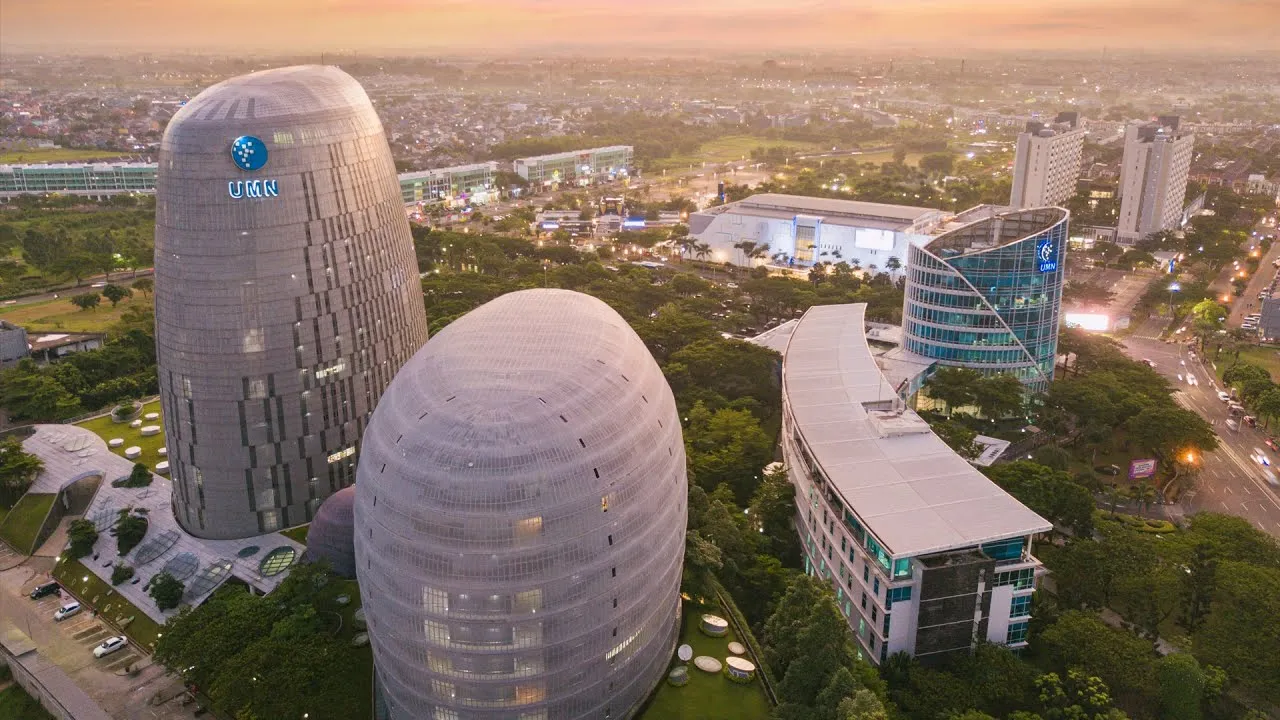
- UMN is dedicated to becoming Indonesia's foremost eco-friendly campus. This commitment is reflected in our infrastructure, which includes energy-efficient buildings, extensive green spaces, and a culture of environmental stewardship. Our achievements in campus infrastructure have earned both national and international recognition.
- Indonesia currently faces a shortage of 50,000 to 100,000 skilled technical workers, particularly engineers.
- The Ministry of National Development Planning / Bappenas prioritized energy security as one of Indonesia's top 10 national goals. This initiative includes 30 programs focusing on renewable energy, energy conservation, and ensuring reliable energy supply.
Drawing on these considerations and insights gleaned from a forum convened by the Badan Kerjasama Teknik Fisika (BKSTF) at the 10 November Institute of Technology, Surabaya in 2015, UMN responded by launching the Engineering Physics Undergraduate Program with a focus on Energy Management. This initiative aims to cultivate specialized professionals equipped with expertise tailored to meet industry and societal demands in the energy sector.
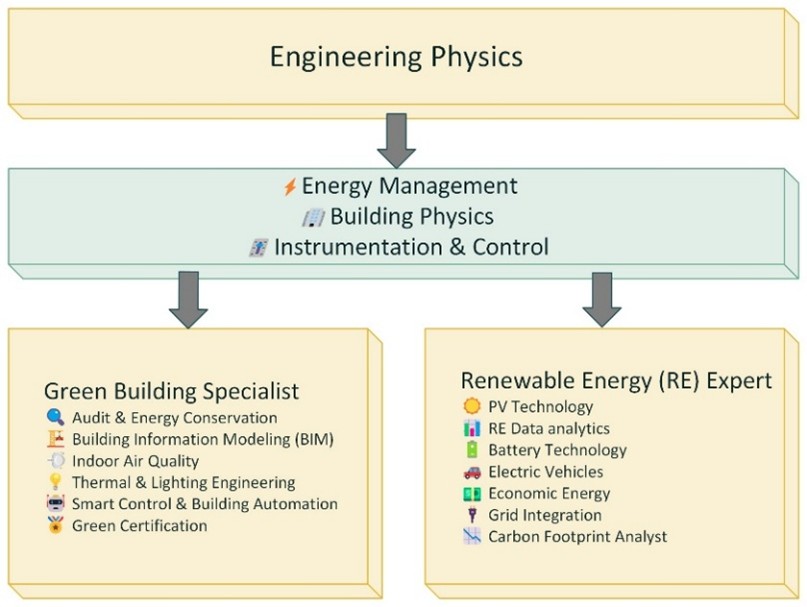
While energy management serves as the primary competency developed in the Engineering Physics Undergraduate Program at UMN, students may also select alternative competencies within the framework of a predetermined final project topic, as outlined by the following competency derivatives.
While energy management serves as the primary competency developed in the Engineering Physics Undergraduate Program at UMN, students may also select alternative competencies within the framework of a predetermined final project topic, as outlined by the following competency derivatives.